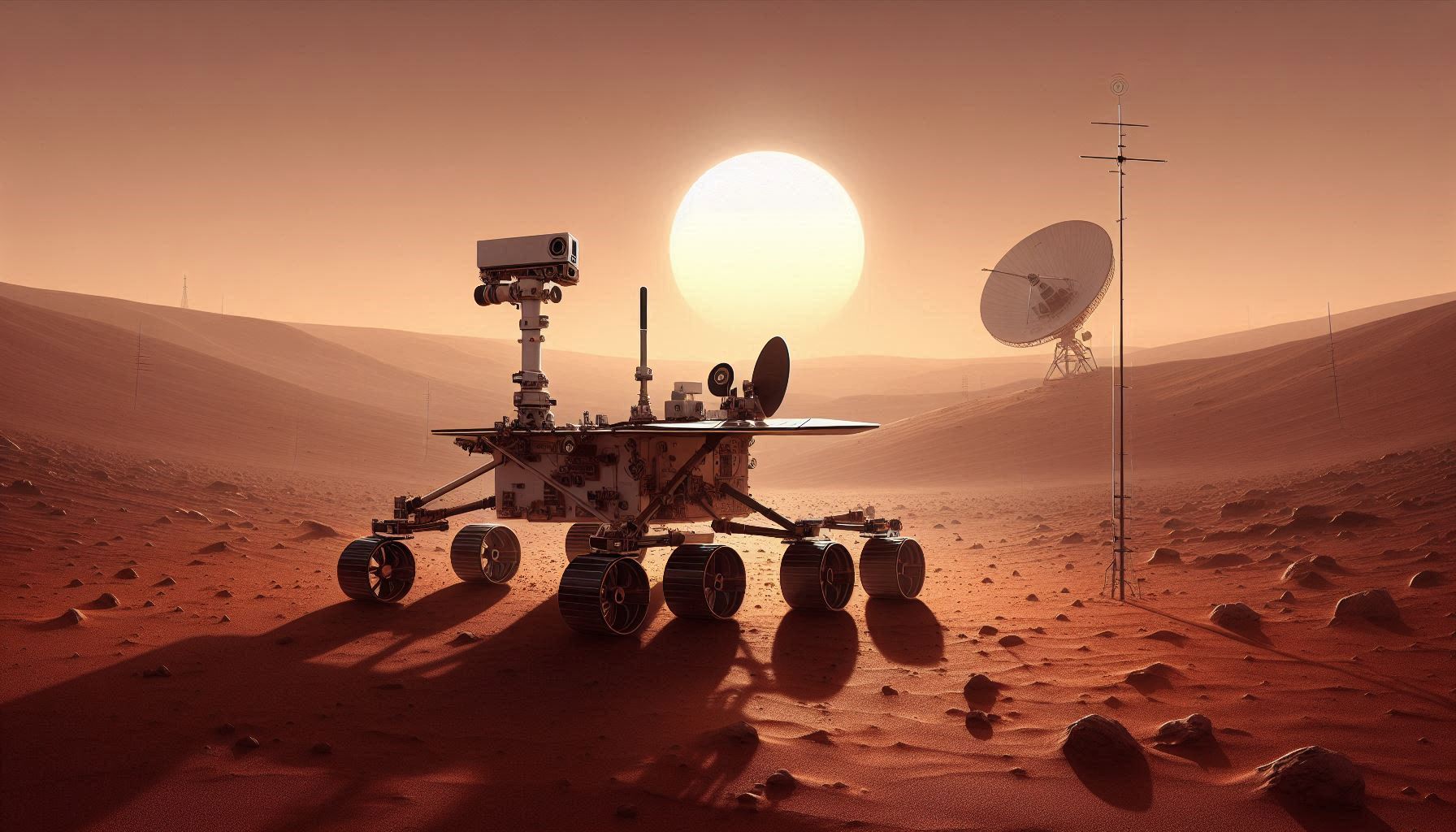
NASA has announced that its decades-long communication link with several Mars rovers is expected to go silent in the coming years due to changes in orbiter positioning and solar conjunctions that make reliable data relay increasingly difficult. The news marks a significant milestone in the operational lifetimes of robotic explorers that have reshaped our understanding of the Red Planet.
Why Contact With Mars Rovers Will Be Lost
Mars rovers like Opportunity, Spirit, Curiosity, and Perseverance depend on orbiters acting as relays to transmit data between Mars and Earth. As orbital dynamics shift and missions age, these relay opportunities will decline. The timing of solar conjunctions — when the Sun lies directly between Earth and Mars — also forces NASA to pause communications periodically, but the combination of diminishing relay support and spacecraft limitations means some rovers may soon fall permanently out of contact.
NASA has described this transition as part of the natural lifecycle for these machines, which were never expected to operate indefinitely but have far exceeded their design lifetimes in many cases.
How Orbiter Dynamics Affect Communication
Communication between Earth and Mars occurs via orbiting spacecraft such as the Mars Reconnaissance Orbiter (MRO) and MAVEN. These platforms provide critical relay links that help forward commands and return scientific data. However, as orbiters follow long, elliptical paths and eventually drift into positions less favorable for relaying signals, ground teams anticipate longer gaps between contacts. NASA engineers monitor orbital mechanics to predict when certain windows will close, and plan rover operations accordingly.
The rover missions have always been constrained by available relay infrastructure, and as new missions arrive and older orbiters retire, contact windows narrow.
What the Rovers Have Achieved
Even as communication windows shrink, the achievements of NASA’s Mars rovers are extraordinary:
Spirit and Opportunity revolutionized our understanding of Martian geology in the 2000s.
Curiosity has been exploring Gale Crater since 2012, assessing past habitability.
Perseverance continues to collect rock samples and deploy the Ingenuity helicopter.
These missions have returned terabytes of data and transformed planetary science by identifying ancient water-related environments and paving the way for future human exploration.
What Happens When Contact Is Lost
When NASA loses reliable communication, the rover won’t be “dead” but it will be unable to receive instructions or send back science results. Past rovers have gone silent after long periods of operation; Opportunity’s last signal was received in 2018. When contact ends definitively, NASA will archive the mission and preserve its legacy in scientific literature and archived data.
Why This Matters for Future Mars Exploration
Managing long-lived robotic explorers on distant worlds highlights the challenges of deep space communication and the need for robust relay networks. NASA and international partners are planning new orbiters and infrastructure to support upcoming missions — including sample return efforts and eventual human exploration.
Understanding how and why contact ends preserves the scientific lessons from these missions and informs design decisions for the next generation of explorers.