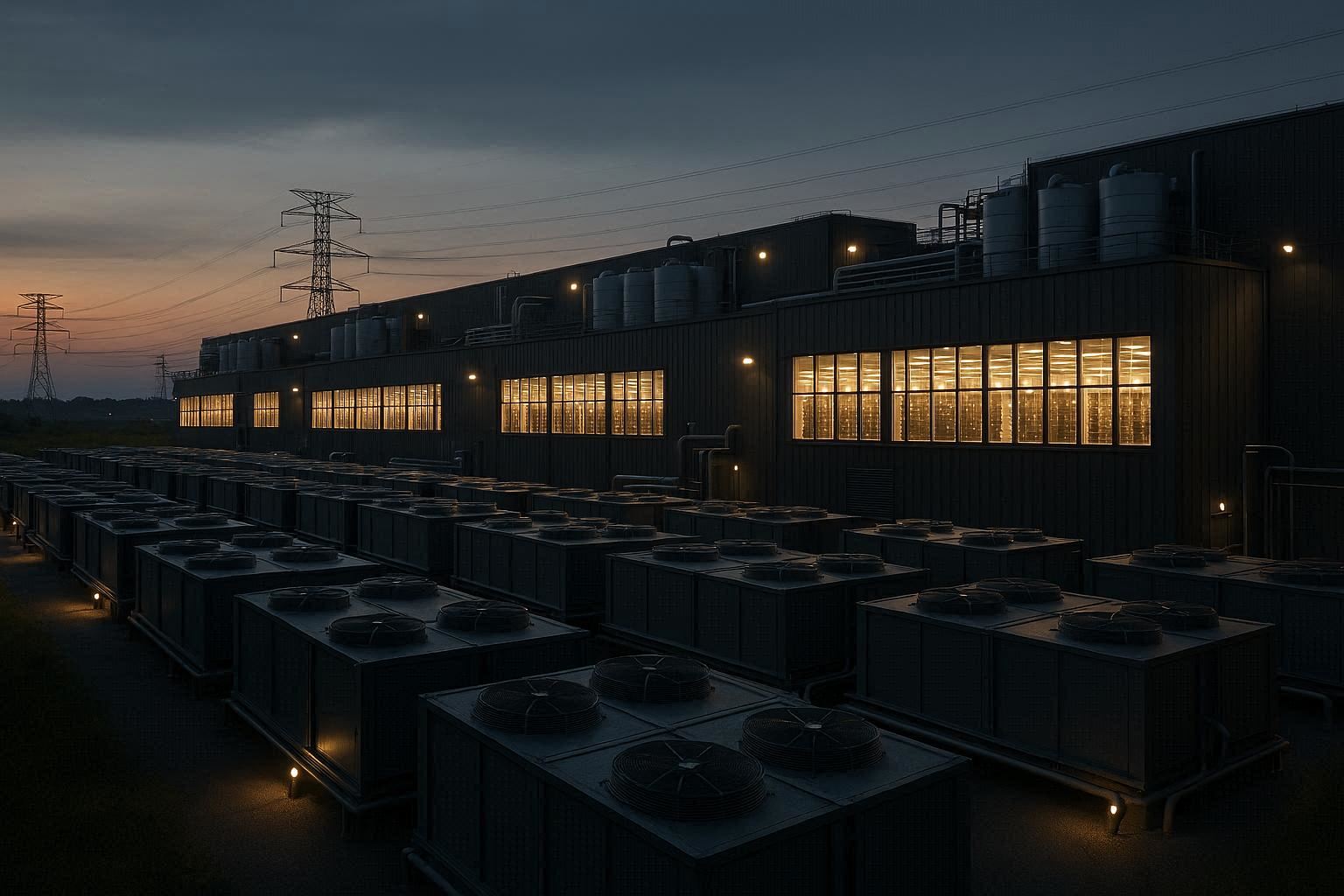
From the early era of mainframes to today’s cloud, data centers have always been the backbone of computing. But now something much bigger is underway: the world’s most powerful companies are investing hundreds of billions of dollars into AI-optimized data centers to support generative models, massive storage, and real-time computing. Giants like OpenAI, Microsoft, Amazon, and Meta are building vast facilities designed specifically for artificial intelligence — and the implications are huge.
What’s Driving the New Data Center Boom?
The rapid adoption of AI technologies — especially large language models and generative systems — has created unprecedented demand for computing infrastructure. These systems require not just traditional server power but the latest generation of high-performance GPUs and specialized cooling technologies, sold at a premium and deployed at massive scale.
Unlike earlier eras when cloud servers and basic storage drove investment, today’s AI centers are designed to run compute-intensive workloads non-stop. Companies are committing tens of billions of dollars to build and expand these facilities, including multi-gigawatt power capacity and advanced networking.
Who Is Investing and Why It Matters
Major players are not holding back:
-
OpenAI and Microsoft are leading some of the largest known infrastructure projects in U.S. history, budgeting combined investments that could top hundreds of billions.
-
Nvidia and AMD are key suppliers of AI-ready chips and systems for these facilities.
-
Other tech leaders such as Amazon, Oracle, and SoftBank are also committing vast resources to new data centers, often tied to AI and cloud expansion.
These investments are not only about capacity but about competitive advantage. The thinking among executives is that whoever controls the most powerful infrastructure will shape AI’s future capabilities and economic influence.
What Makes AI Data Centers Different
AI data centers differ from traditional facilities in several key ways:
-
Extremely high power density: Modern AI racks can draw tens of kilowatts each, far beyond older server racks.
-
Advanced cooling requirements: Heat generated by AI hardware requires liquid cooling, specialized airflow systems, and sophisticated temperature regulation.
-
Rapid hardware turnover: Unlike legacy centers that focus on long-term stability, AI centers evolve quickly as new chips and accelerators are developed.
Some analysts even argue that legacy data centers built just a few years ago are already outdated, unable to efficiently power the most advanced AI workloads without major upgrades.
Broader Effects on Resources and Communities
Beyond the tech industry, the rise of massive data centers has real-world impacts:
-
Energy demand: AI centers consume huge amounts of electricity, leading to pressure on local grids and energy resources.
-
Water usage: Cooling and operations require significant water, affecting local supplies and raising sustainability questions.
-
Community strain: Traffic, land use, and environmental concerns have prompted resistance or political debates in some regions.
These centers have become economic engines in some areas but also points of contention between corporate growth and community impact.
Is There a Risk of Overbuilding?
With so much capital pouring in, some experts wonder whether the AI data center boom is sustainable. Critics warn of:
-
Bubble-like overshoot if infrastructure outpaces real demand.
-
Resource constraints like power and water that might limit expansion.
-
Local pushback that could slow or halt future projects.
Just as past infrastructure waves reshaped technology industries, this surge could redefine computing — for better or worse.
What This Means for You
Even if you’re not building AI models yourself, the shift toward AI-optimized data centers affects consumers and businesses alike:
-
Faster and more powerful AI services
-
Greater reliance on cloud platforms
-
Environmental and infrastructure debates in communities
-
Economic shifts tied to digital infrastructure
Understanding this trend gives you a clearer picture of where computing and AI are headed — and why it’s not just about software anymore.