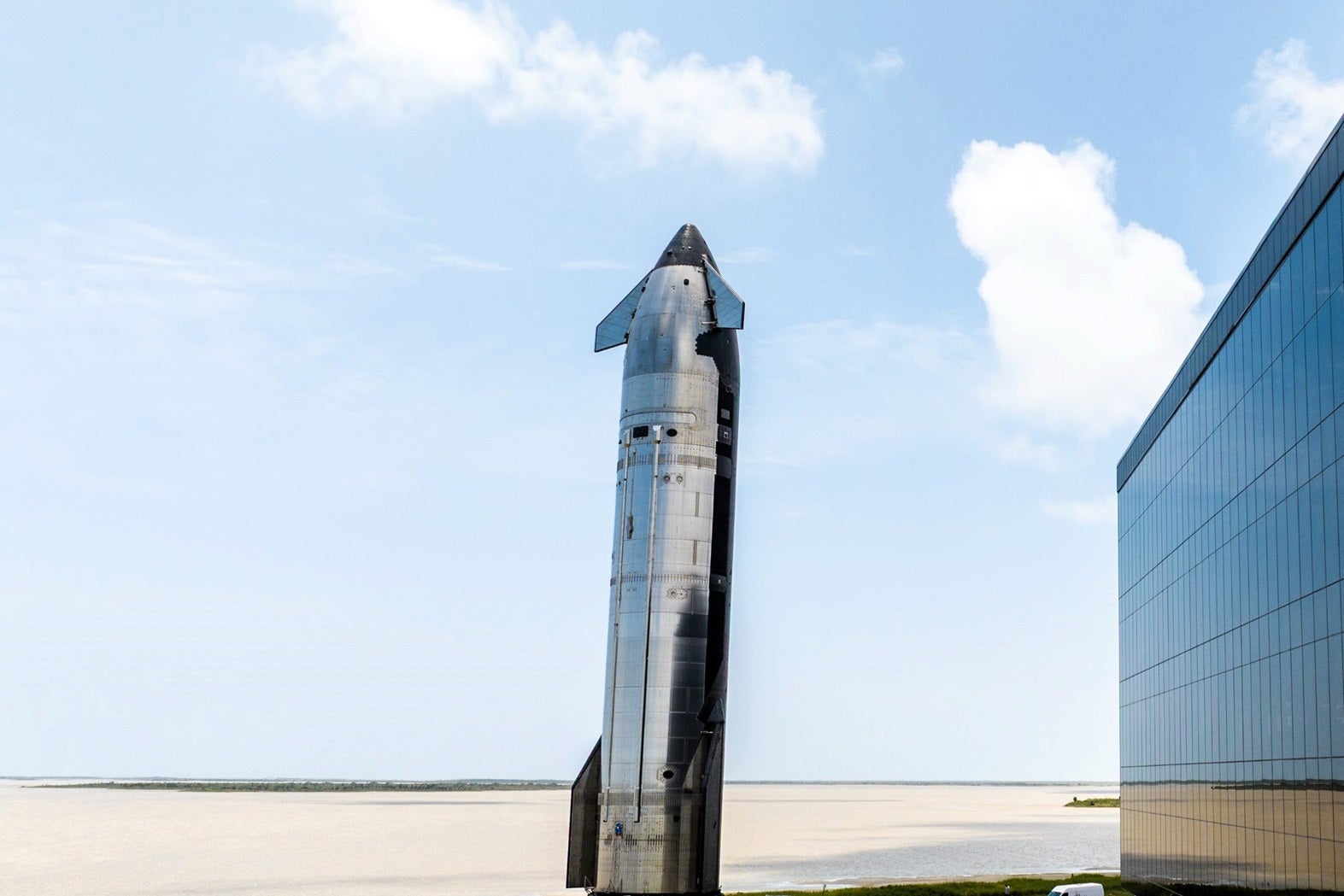
SpaceX unveiled an enhanced version of its Starship rocket booster in South Texas on Thursday to initiate testing, and just a few hours later, an explosion occurred inside it.
Live streamers who closely monitor SpaceX’s Starbase complex captured the explosion during the early hours of Friday, around 4:00 a.m. local time. Other creators in the vicinity have since taken photographs that provide a closer examination of the damage.
In contrast to the more fireball-like explosions SpaceX has experienced during its rocket development in the past, this incident seems to have blown out an entire side of the lower section of the booster, while the remainder remained intact. It also transpired very early in the process, as the booster reportedly did not yet have rocket engines installed, according to Ars Technica.
SpaceX stated in a post on X that it was conducting “gas system pressure testing” at the time of the explosion. The company confirmed that no injuries occurred, as the area had been cleared for testing.
“The teams need time to investigate before we are confident of the cause,” SpaceX wrote on Friday.
The booster represents the first significant component of what SpaceX is designating as Starship version three, or “V3.” Starship V3 is intended to be larger, more powerful, more reliable, and capable of docking with other Starships in orbit around the Earth — a vital element of SpaceX’s strategy for reaching the Moon and Mars. (The company completed the final V2 design flight in October.)
The immediate implications of the explosion on SpaceX’s future actions remain unclear. However, any substantial delay in its testing program could jeopardize SpaceX’s overall objectives.
The company is targeting a highly active 2026 for Starship. This plan includes showcasing the capability to transfer fuel to Starship from a "tanker" variant of the rocket while it is in orbit. SpaceX must demonstrate this ability to NASA before it can advance with crewed missions to the Moon, which it is reportedly aiming for in 2028.
Acting NASA administrator Sean Duffy has already expressed his concerns regarding SpaceX's pace on its Moon-mission advancements, indicating that he might consider awarding the contract to Jeff Bezos’ Blue Origin instead.
Blue Origin is accelerating its efforts in developing its own mega-rocket. Just last week, the company successfully launched its New Glenn rocket for the second time and delivered its inaugural commercial payload for NASA. Additionally, the company achieved a successful landing of its first New Glenn rocket booster. On Thursday, the company unveiled an even larger design for New Glenn that will compete more directly with Starship.