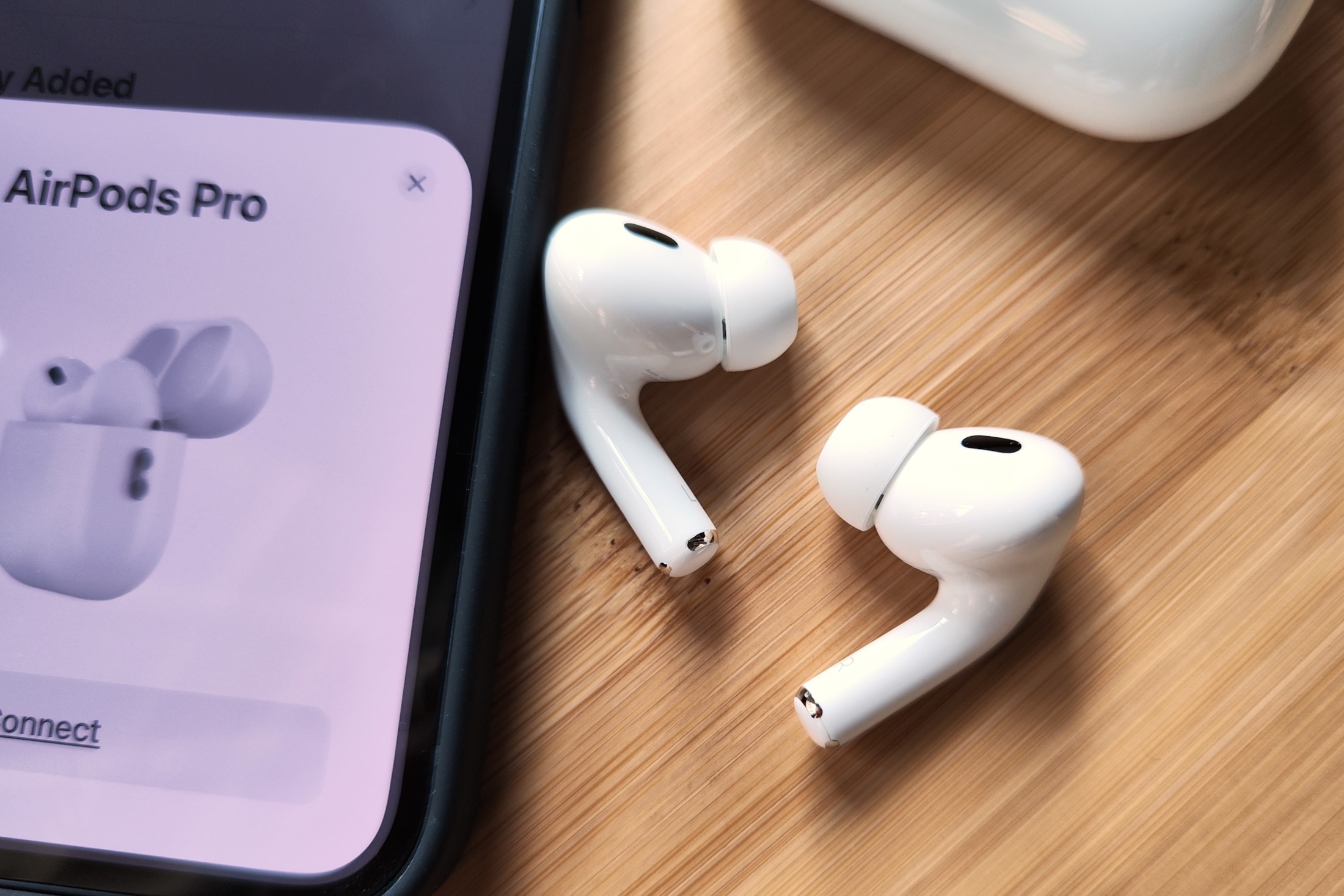
The recent update introduces three significant features: Hearing Protection designed to minimize exposure to loud environmental sounds, an at-home Hearing Test capability, and a Hearing Aid function tailored for individuals with mild to moderate hearing loss.
This technology, developed at Apple's advanced Audio Lab in Cupertino, California, seeks to tackle a global health issue that impacts approximately 1.5 billion individuals worldwide, as reported by the World Health Organization.
"We have developed an innovative, comprehensive hearing health experience that is both user-friendly and adaptable to diverse needs," stated Sumbul Desai, M.D., Apple's vice president of Health. "We anticipated that the outcomes would profoundly impact lives and broaden access to treatment."
The features underwent rigorous testing within the company's specialized facilities, including the Longwave anechoic chamber and Fantasia Lab, which employs 50 loudspeakers to replicate real-world sound environments. Engineers performed thousands of clinical-grade audiometry tests in three dedicated audiometric booths prior to conducting clinical validation studies.
Kuba Mazur, Apple's lead engineer for hearing health, highlighted the thorough testing methodology: "From the faintest sounds detectable for the Hearing Test feature to speech in bustling restaurants for the Hearing Aid function, and even concert-level volumes for Hearing Protection, we are able to integrate real-world scenarios into our acoustic testing environments."
The development process involved collaboration among various teams, including software and hardware engineering, design, health, accessibility, clinical operations, and regulatory departments, ensuring that the features not only met clinical testing standards but also remained user-friendly.
Apple's AirPods Pro 2 have now been enhanced to function as clinical-grade hearing aids.
admin
•
Oct 30, 2024