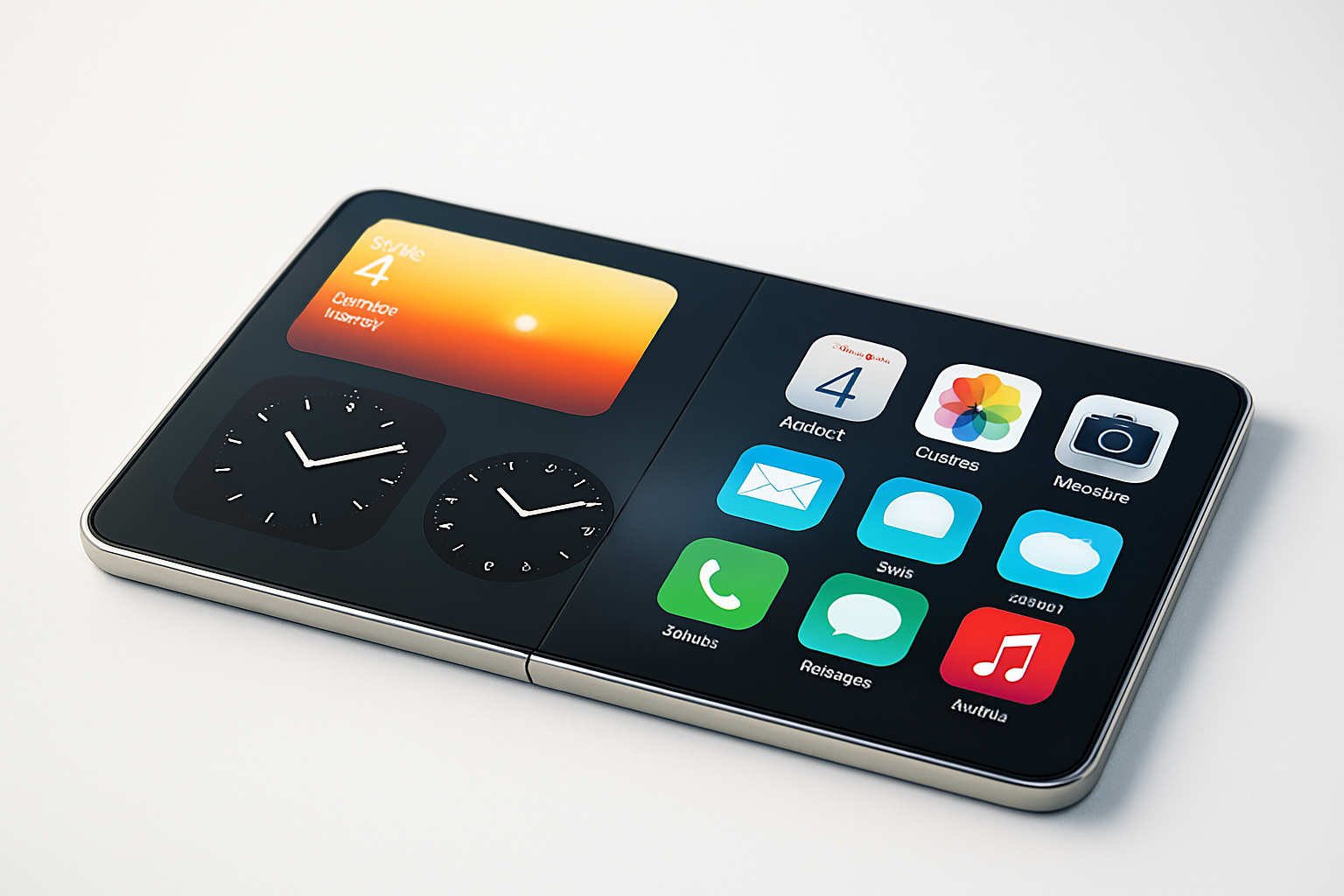
This upcoming device marks Apple’s long-awaited entry into the foldable smartphone category, which has been dominated by Samsung and Google in recent years.
What We Know So Far About the iPhone Fold
Launch Timeline
-
Apple may unveil its foldable iPhone in 2026 — potentially alongside the next iPhone 18 series.
-
Some rumours mention possible production beginning later this year, with deliveries early next year.
Rumoured Design Highlights
-
Slim body and premium build: Apple is reportedly focusing on an ultra-thin, lightweight profile to make its first foldable device feel highly refined and practical in everyday use.
-
Hidden internal camera: Instead of a prominent notch or punch-hole, the phone may hide the front camera beneath the screen for a clean, uninterrupted display.
-
Book-style fold: The device is expected to open like a small tablet — similar to the design used on other high-end foldables, but optimized to feel more seamless and robust.
Biometric Upgrades: Touch ID Returns?
Reports suggest that Apple may ditch Face ID in favour of a side-mounted Touch ID sensor on the iPhone Fold — a move that could help enable the ultra-thin form factor.
This would mark a notable shift for Apple, which has increasingly leaned on Face ID for authentication on recent flagships.
Camera & Display Features
-
Under-display selfie camera: A 24 MP under-screen selfie camera could be featured, offering higher quality than many current foldables.
-
Dual rear cameras: The main and ultra-wide lenses could be on par with Apple’s flagship specs, providing powerful imaging on a foldable.
-
Large internal display: When unfolded, the device is rumoured to reveal a expansive screen — likely around ~7.8 inches — ideal for multimedia, gaming, and productivity.
Market Impact
Analyst estimates suggest that Apple’s first foldable could capture over 20 % of the global foldable market share and around 34 % of revenue in its first year, thanks to strong pricing and demand.
Why This Rumoured Device Matters
The iPhone Fold could be a game-changer in the competitive foldable market — combining Apple’s ecosystem strengths with a refined hardware approach to foldable displays. Its rumored design choices — including a hidden camera and slim body — reflect Apple’s focus on blending innovation with practicality.
With foldables becoming more popular year after year, Apple’s entry signals that this form factor is ready for prime time — and could push wider market adoption beyond niche early adopters.